
Fieldnote #38: What To Read
Books on Walking

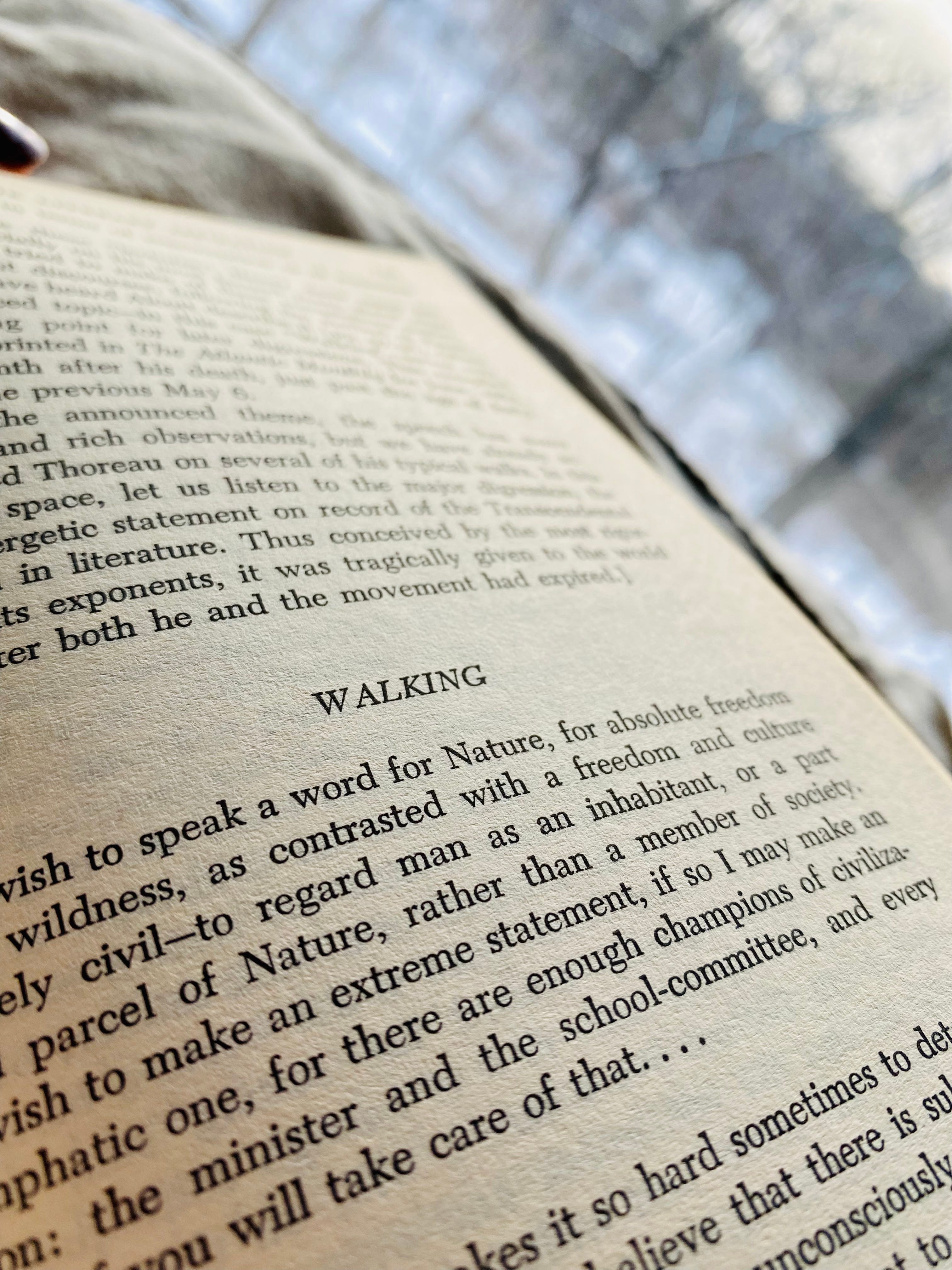
Henry David Thoreau. Walking. First delivered as a lecture in 1851; first published posthumously in The Atlantic Monthly, June 1862.
Henry David Thoreau’s essay Walking begins with a declaration that still feels radical: “I wish to speak a word for Nature, for absolute freedom and wildness […].” He is not talking about exercise, or leisure, or even scenery. He is talking about a way of being in the world.
For Thoreau, walking is not something done after the day’s work is finished; it is the work. To walk, truly, is to leave behind the pressures of usefulness and productivity and step into what he calls “sauntering” — a word he traces to pilgrimage. A walk, in this sense, is not about getting somewhere. It is about orientation: turning oneself toward the wild, toward what resists ownership and control.
What strikes me most, rereading Walking, is how physical Thoreau’s thinking is. He does not separate mind from body. Thought happens in motion, in rhythm, in contact with ground and weather. He insists that we need the wild — the edge of town, the untended field, the place where the road dissolves – not as something distant or spectacular, but as something close at hand.
Thoreau also understands walking as a form of refusal. To walk is to step, even briefly, outside the economy of efficiency. It gives time back to the day. In a culture that measures worth by output, walking becomes an act of quiet resistance — a way of saying that attention itself has value.
And yet Walking is not nostalgic. Thoreau is not asking us to return to some imagined past. He is asking us to practice presence. To notice which direction our feet naturally turn. To ask whether we are moving through the world awake.
To walk, Thoreau suggests, is to remember that we belong not only to schedules and obligations, but to the living world itself. He reminds us that walks shape how we think, how we live, and how we imagine freedom.
Thoreau, Henry David. Walking. In Excursions, edited by Maria Weston Chapman, Ticknor and Fields, 1863.
❧
For those who celebrated Christmas this week, I hope you had a joyful holiday. Wishing you a peaceful end to the year. Thank you for walking with me!
See you next Friday,
xx
Jana
📕Out now: Walk Her Way New York City. A Walking Guide to Women’s History. (Hardie Grant, 2025)